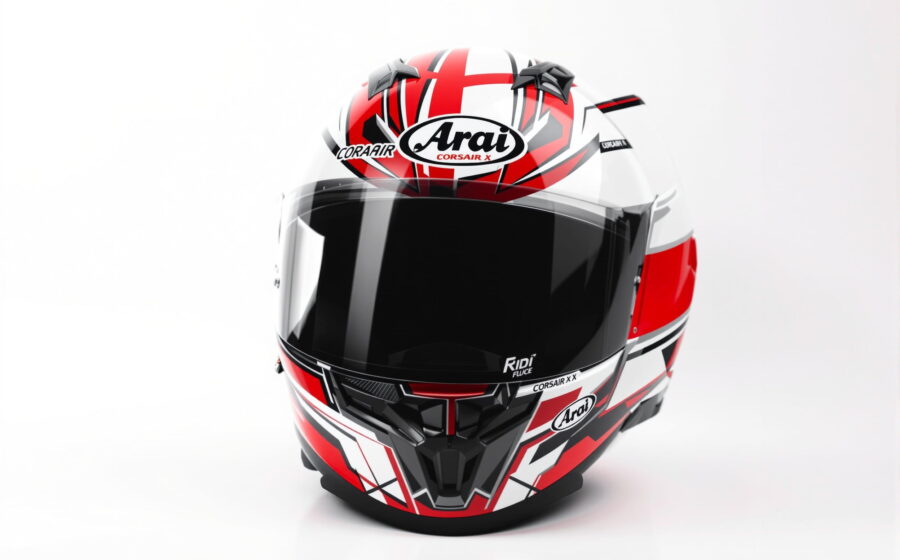
Breaking down the three major helmet safety certifications so you can make an informed purchase and ride with confidence.
Choosing a motorcycle helmet is one of the most important decisions a rider makes. A helmet acts as your primary defense against serious injury, but looking at a wall of options can be overwhelming. You will quickly notice small stickers on the back of the helmets showing different acronyms. These letters indicate the safety standards a helmet meets.
Understanding these safety ratings is crucial for your protection. The testing methods, requirements, and legal statuses vary widely depending on the certification. Some focus on everyday street impacts, while others simulate extreme racing conditions.
By learning how these certifications work, you can select the gear that best fits your riding style, location, and safety needs. Here is a clear look at the three primary safety standards you will encounter: DOT, ECE, and SNELL.
DOT (Department of Transportation) Standard
The DOT standard is the legal baseline for motorcycle helmets in the United States. Specifically known as FMVSS 218 (Federal Motor Vehicle Safety Standard No. 218), this certification is required for any helmet sold for on-road use in the US.
The testing for a DOT certification focuses on three main areas. First, the impact attenuation test drops the helmet onto a spherical and flat anvil to measure shock absorption. Second, a penetration test drops a pointed striker onto the shell to ensure sharp objects cannot pierce through. Finally, a retention system test pulls the chin strap with heavy weights to confirm it will not break or stretch too far during a crash.
One unique aspect of the DOT standard is its self-certification model. Manufacturers test their own helmets and apply the DOT sticker if they believe the product passes. The government then conducts random batch testing through independent labs. If a helmet fails this random check, the manufacturer faces heavy fines and must issue a recall.
ECE (Economic Commission for Europe) Standard
The ECE standard is the most widely recognized helmet certification in the world. Used by over 50 countries, the current iterations are ECE 22.05 and the newer, more stringent ECE 22.06.
Unlike the American system, ECE requires independent testing before a helmet ever reaches the market. Manufacturers must send a batch of helmets to a designated lab. The lab runs a series of tests, and only after passing can the manufacturer apply the ECE sticker and sell the helmets to the public.
ECE testing is known for being highly comprehensive. It includes impact tests on various points of the helmet, abrasion resistance tests, and visor impact tests. The newer 22.06 standard even incorporates rotational impact testing. This measures how the helmet handles twisting forces during a crash, which is a major factor in preventing brain injuries. Because the testing is independent and exhaustive, many riders view the ECE standard as highly reliable.
SNELL (Snell Memorial Foundation) Standard
The SNELL certification is entirely voluntary and is managed by a private, non-profit organization. Named after racing driver Pete Snell, who died from head injuries in a crash, the foundation aims to push helmet safety beyond government minimums.
SNELL updates its standards every five years, with the M2020 standard being the most recent for motorcycles. To earn a SNELL sticker, a manufacturer must apply for testing and submit their helmets to the foundation’s lab. The tests are notoriously aggressive. They simulate high-speed impacts against extreme surfaces, such as a sharp metal edge known as a hemi-anvil.
Because SNELL standards are born from auto racing, they favor very stiff, rigid helmet shells. A SNELL-certified helmet can withstand massive amounts of force. For this reason, many competitive track organizations mandate SNELL certification for participating riders.
Key Differences and Comparison
Comparing these three standards reveals different philosophies regarding rider safety.
- Testing Enforcement: DOT relies on an honor system with random audits. ECE and SNELL require rigorous independent testing before a helmet can be sold.
- Impact Profiles: DOT and ECE focus on the types of impacts common in daily street riding. They favor helmets that absorb energy at moderate speeds. SNELL focuses on high-velocity racing impacts, favoring stiffer shells that withstand extreme force.
- Global Acceptance: DOT is strictly an American standard. SNELL is highly respected globally but primarily required for track days. ECE is accepted as street-legal in over 50 countries and is the standard used by major racing bodies like MotoGP.
- Rotational Forces: ECE 22.06 explicitly tests for rotational acceleration, a leading cause of concussions. DOT and current SNELL motorcycle standards place less emphasis on this specific metric.
Which Safety Standard Matters Most?
The standard that matters most depends entirely on where and how you ride.
If you ride on public streets in the United States, a DOT-certified helmet is a legal requirement. Riding without one can result in fines and leaves you with inadequate protection. However, because DOT relies on self-certification, many safety-conscious riders look for helmets that carry an additional certification.
If you ride a mix of city streets and highways, an ECE-certified helmet offers excellent peace of mind. The mandatory independent testing and inclusion of rotational impact metrics make it a highly trusted standard for everyday hazards.
If you spend your weekends at the racetrack, SNELL is likely your best option. The intense testing parameters align perfectly with the high speeds and extreme impact risks associated with competitive riding. In fact, your local track organization will likely require it.
Make the Right Choice for Your Ride
No single certification is flawlessly perfect for every single scenario. The best approach is to identify your primary riding environment and choose a helmet that meets those specific demands.
Always look for a helmet from a reputable manufacturer that fits your head snugly and comfortably. A poorly fitting helmet will not protect you properly, regardless of the sticker on the back. Take the time to try on different shapes, verify the safety ratings, and select the gear that lets you focus on the road ahead.