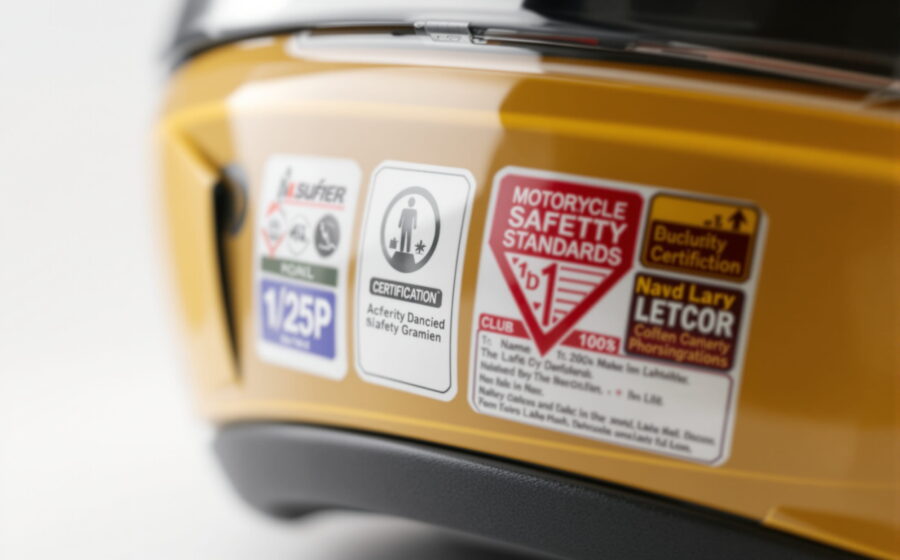
A poorly fitting helmet is dangerous. Learn how to measure your head correctly and find the right helmet size for maximum protection.
Protecting your head starts with knowing your exact measurements. Whether you are cycling, riding a motorcycle, or hitting the ski slopes, a helmet only works if it stays securely in place during an impact. A loose helmet can slip off, while a tight one will cause discomfort and distract you from the road ahead. Measuring your head takes just a few minutes and guarantees you get the right gear.
Step-by-step guide to measuring your head
You do not need any special tools to get an accurate head measurement. All you need is a flexible tape measure. If you do not have one, you can use a piece of string and a standard ruler.
1. Position the tape measure
Take your flexible tape measure and wrap it around the widest part of your head. This spot is usually about one inch, or two fingers’ width, above your eyebrows. Make sure the tape sits just above your ears and goes straight across the back of your head.
2. Keep it level and snug
Ensure the measuring tape is level all the way around. It should feel snug against your skin or hair, but not so tight that it pinches.
3. Record your measurement
Note the number where the tape overlaps. It is best to write down the measurement in both centimeters and inches, as different manufacturers use different metric systems. If you are using a piece of string, pinch the spot where the string meets, lay it flat on a table, and measure that length with your ruler. Take the measurement two or three times to ensure accuracy.
Understanding helmet size charts
Once you have your measurement, you need to consult a sizing chart. Helmet sizes are not universal. A medium helmet from one brand might fit differently than a medium from another.
Always check the specific sizing chart provided by the manufacturer of the helmet you want to buy. Look for your head circumference measurement on the chart and find the corresponding size. If your measurement falls exactly between two sizes, it is generally safer to choose the smaller size. Helmets often feature interior padding that will compress slightly over time to conform to your head shape.
Testing the fit and making adjustments
Finding the right size on paper is only half the process. You must test the helmet in person to confirm it fits correctly.
When you put the helmet on, it should slide down firmly. The padding must touch your head evenly all the way around without leaving any large gaps. It should feel comfortably snug, pressing against your cheeks and forehead without causing pain or pressure points.
Next, fasten the chin strap. You should only be able to fit one or two fingers between the strap and your chin. Finally, perform a quick motion test. Shake your head gently from side to side and up and down. The helmet should stay in place and move with your skin, rather than sliding around independently. If the helmet shifts easily, it is too large.
Ride with confidence
Wearing the right helmet is the easiest way to stay safe during your favorite activities. By taking five minutes to measure your head, check manufacturer charts, and test the physical fit, you can hit the road or trail with total peace of mind. Grab your measuring tape today and make sure your current helmet is actually doing its job.